PHYSICSCAMBRIDGE IGCSE PHYSICS (0625)
The period of a pendulum
Time a pendulum at different lengths and plot the period squared against length to get a straight line.
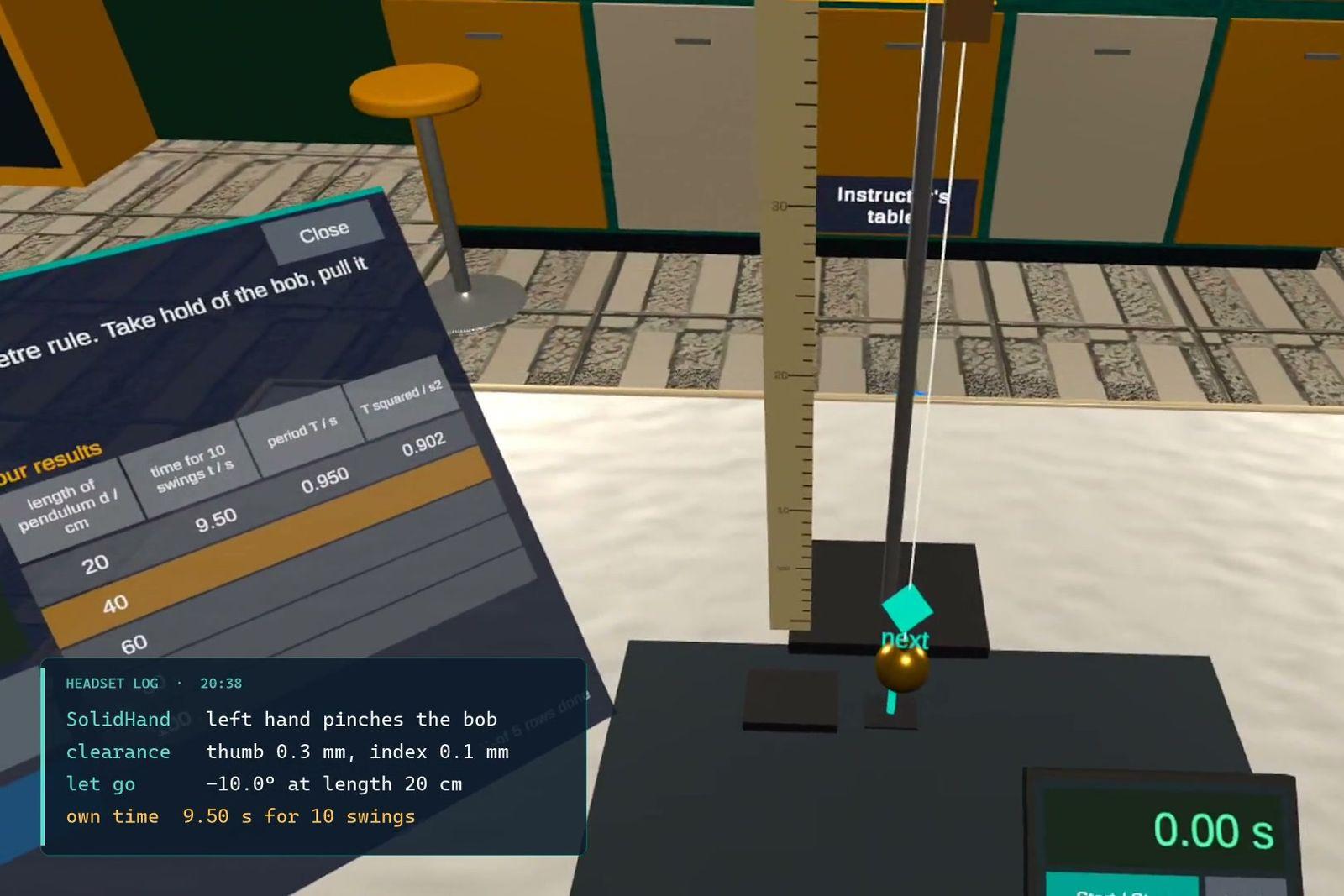 IN LABORAVR · FIRST PRACTICALS BUILT
THE PRACTICAL
What you do
Pull the bob aside a small distance and release it. Time ten complete swings and divide by ten to get the period, T. Repeat for five lengths, L, and plot T² against L.
| Point | Why it matters |
|---|---|
| Time ten swings, not one | Your reaction time is a large part of a single swing; over ten swings its effect is ten times smaller. |
| Small swings only | The period stays nearly the same only for small swings. |
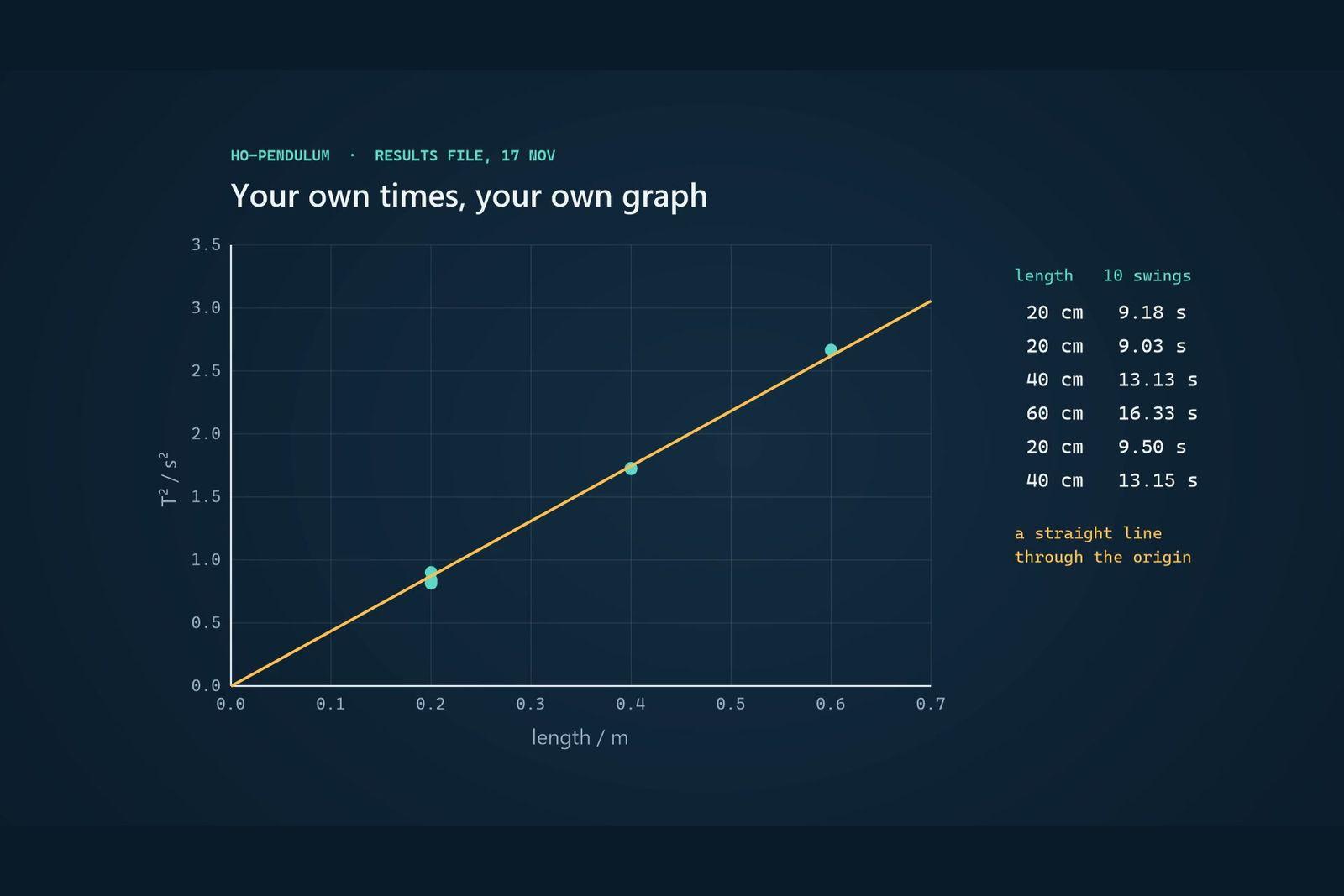
| Plot T² against L | The points lie close to a straight line through the origin: T² is proportional to L. |
| Measure L to the centre of the bob | The length is from the point of suspension to the centre of mass of the bob. |
IN THE EXAM
Record every reading, including repeats, with units in the table heading, and the period to the same number of decimal places throughout.
IN LABORAVR
Do it with your own hands.
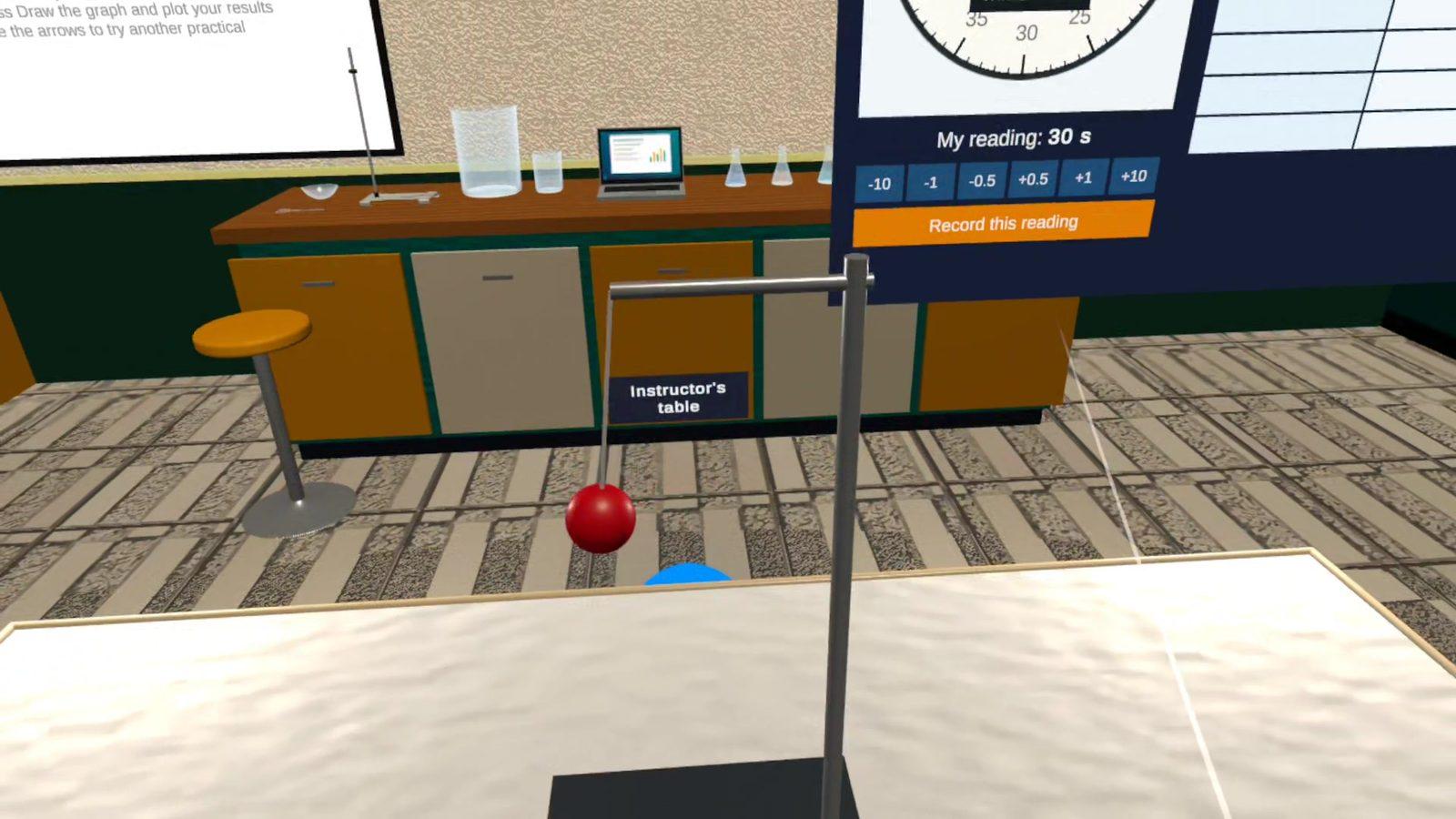
- Pull the bob aside with your hand and time ten swings on the bench stopwatch.
- Each reading goes into your own table.
- Your own timings are plotted as T² against length on your own graph.

Want this in your school?
We are preparing our first school pilot. The first departments decide what gets built next.
Join the pilotFor students preparing for IGCSE practical papers. Not affiliated with or endorsed by Cambridge.