PHYSICSCAMBRIDGE IGCSE PHYSICS (0625)
Refraction: pins through a glass block
Trace a ray through a rectangular glass block with pins, measure the angles of incidence and refraction, and see the ray bend towards the normal.
THE PRACTICAL
What you do
Draw round the block on paper. Push two pins in along a line that meets the block at an angle. Look through the block from the other side and push in two more pins so all four appear in a line. Join the pins, draw the normal, and measure the angles.
| Point | Why |
|---|---|
| The ray bends towards the normal as it enters the glass | Light slows down in glass |
| It bends away from the normal as it leaves | Light speeds up again in air |
| The ray that leaves is parallel to the ray that entered | The two faces of the block are parallel |
| Pins far apart | Lines up the ray more precisely |
| Refractive index, n = sin i ÷ sin r | From the angles of incidence, i, and refraction, r |
IN THE EXAM
Measure angles from the normal, not from the surface of the block. Line the pins up by their bases, low down, where they meet the paper.
Practise it here, free:
Practical paper quizIN LABORAVR
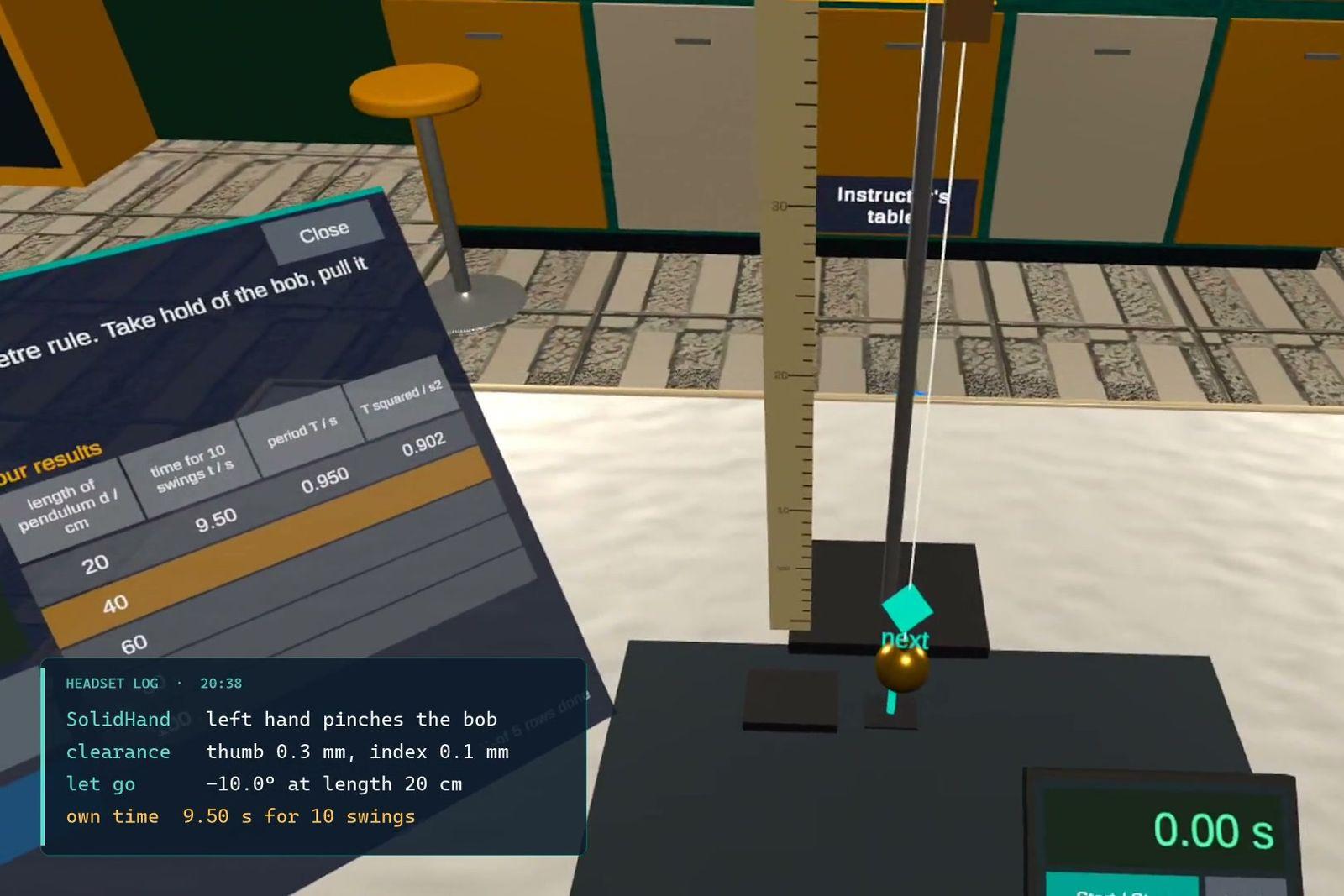
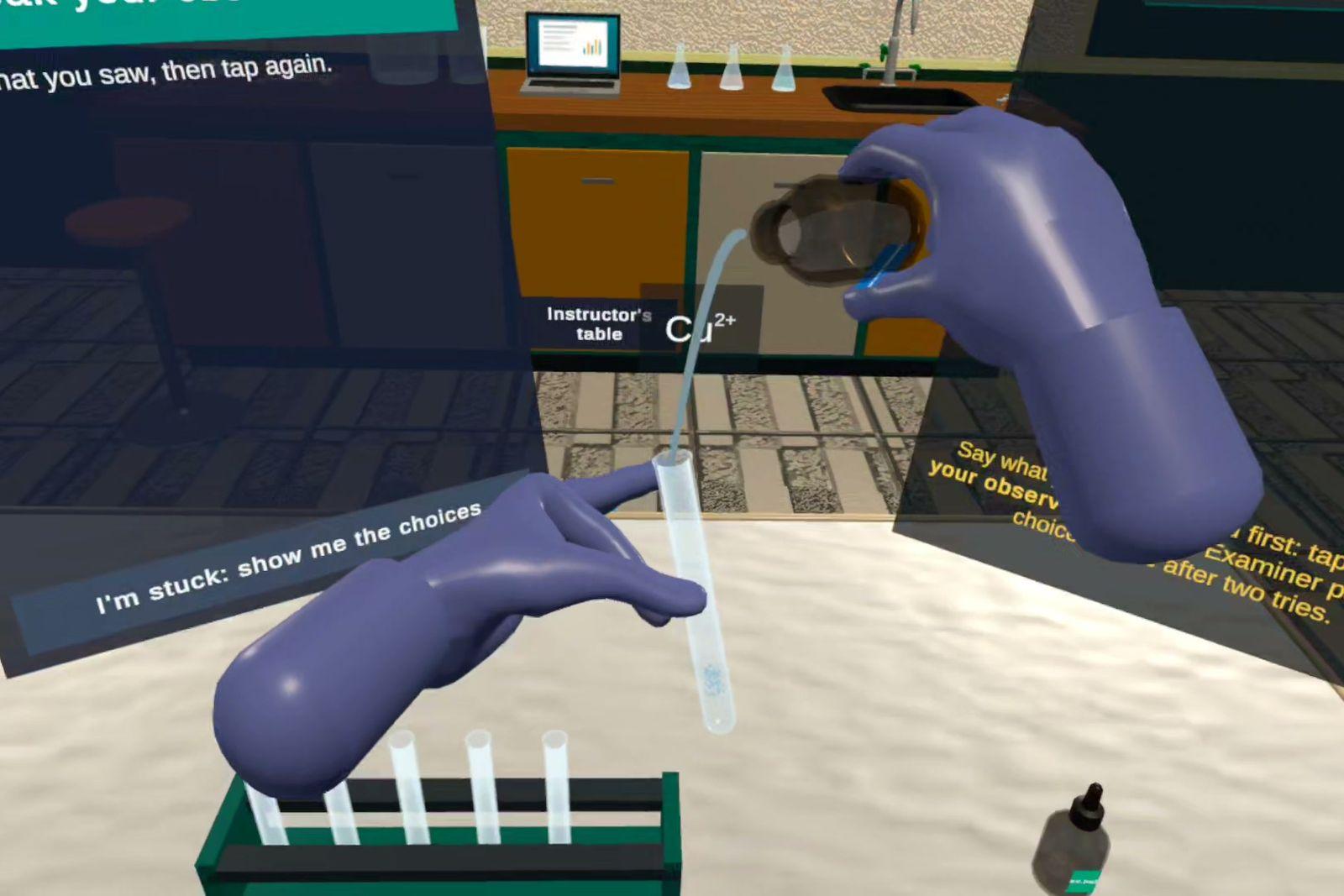
Do it with your own hands.
- The headset knows where your eye is, so you line up pins through the block by looking, as on paper.
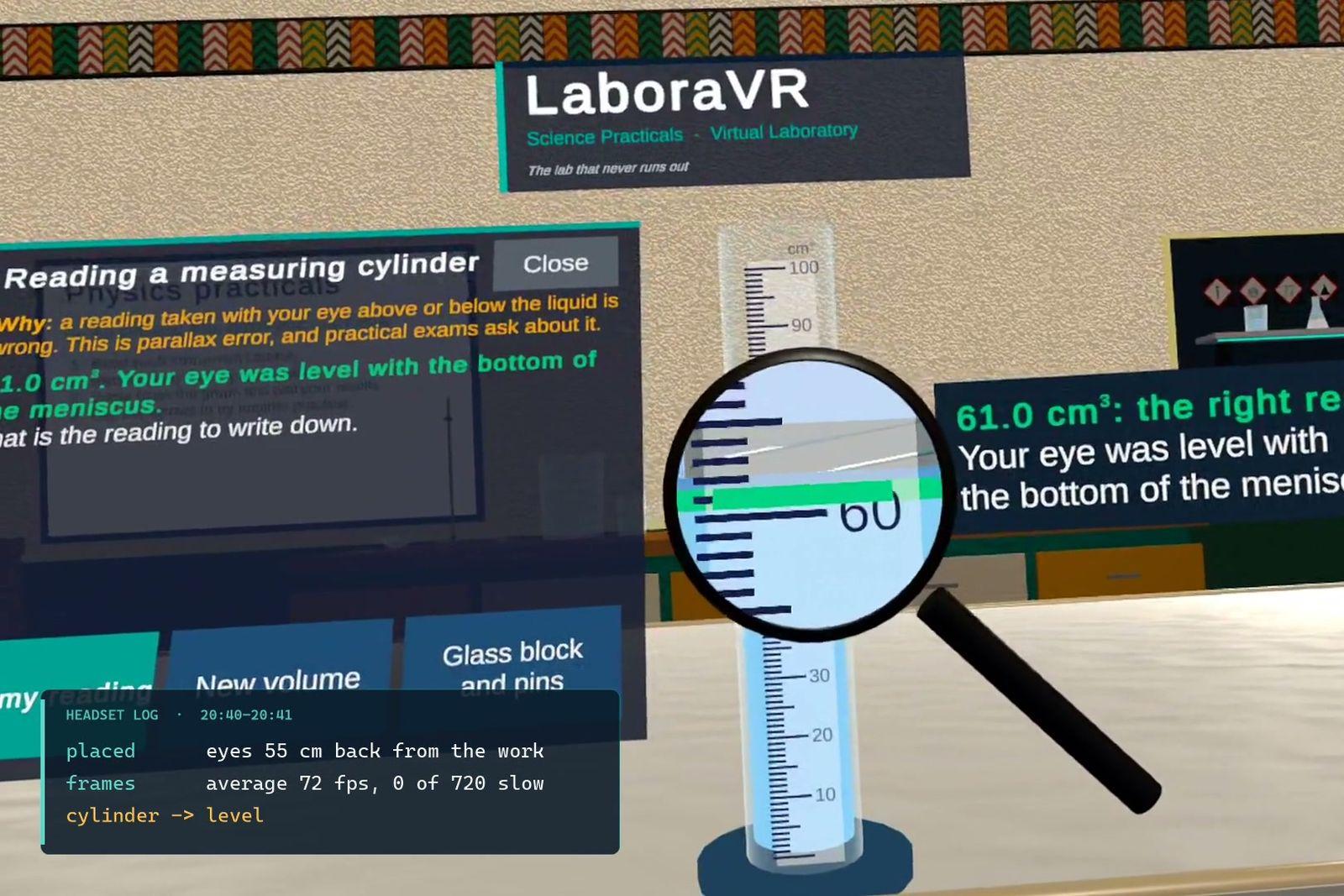
- The same idea makes a measuring cylinder read wrongly from above.
Want this in your school?
We are preparing our first school pilot. The first departments decide what gets built next.
Join the pilotFor students preparing for IGCSE practical papers. Not affiliated with or endorsed by Cambridge.