CHEMISTRYCAMBRIDGE IGCSE CHEMISTRY (0620)
Tests for gases
Identify hydrogen, oxygen, carbon dioxide, ammonia, chlorine and sulfur dioxide with a splint, limewater, litmus or manganate(VII).
 IN LABORAVR · IN THE HEADSET
THE PRACTICAL
What you do
Collect or hold the test near the mouth of the tube where the gas is given off, and record the result.
| Gas | Test | Positive result |
|---|---|---|
| Hydrogen, H₂ | A lighted splint | “Pops” |
| Oxygen, O₂ | A glowing splint | Relights |
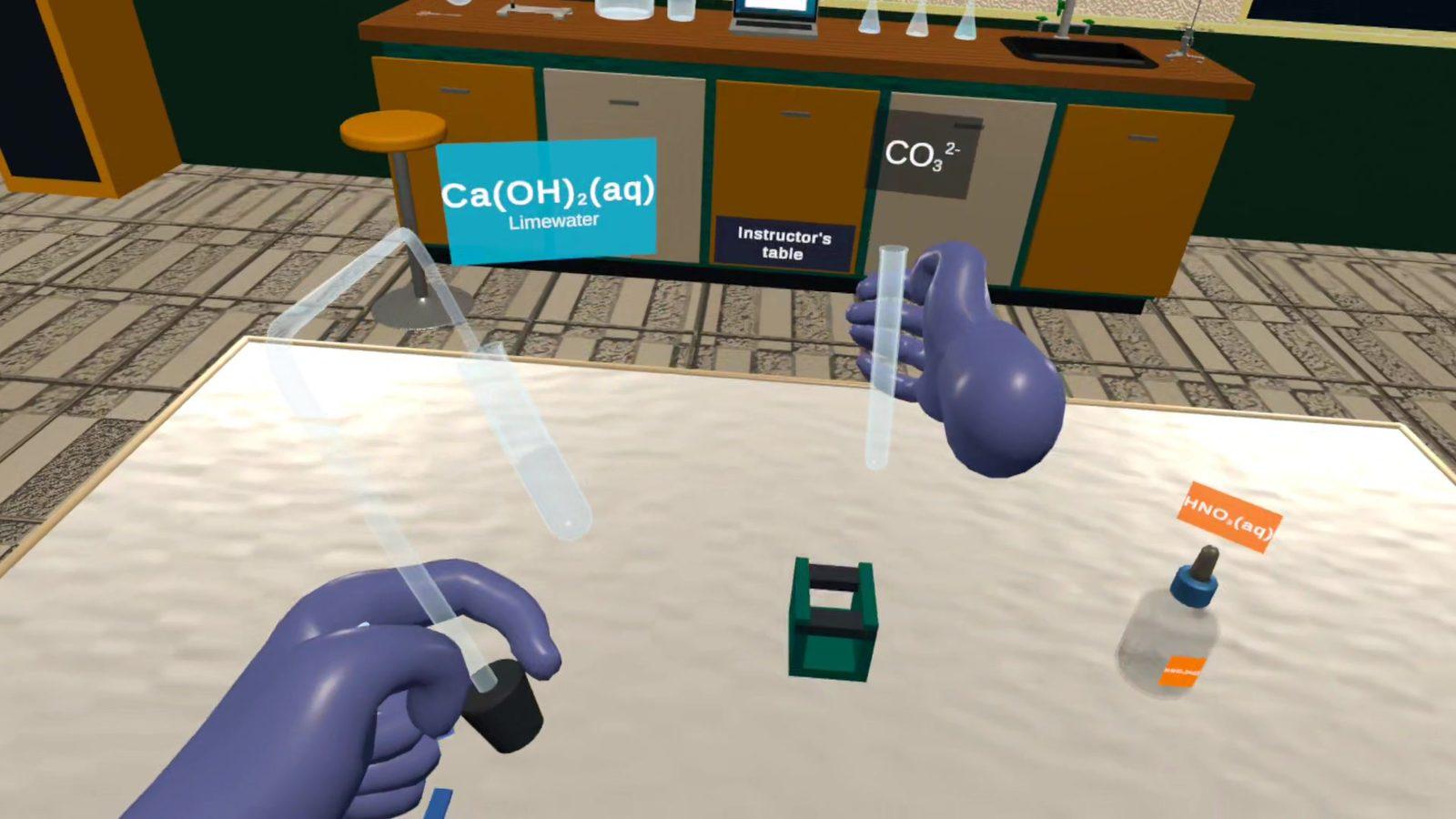
| Carbon dioxide, CO₂ | Bubble through limewater | Limewater turns milky |
| Ammonia, NH₃ | Damp red litmus paper | Turns blue |
| Chlorine, Cl₂ | Damp litmus paper | Bleached |
| Sulfur dioxide, SO₂ | Acidified aqueous potassium manganate(VII) | Purple to colourless |
IN THE EXAM
Litmus paper must be damp: a gas only changes its colour once it dissolves. Say “lighted” for hydrogen and “glowing” for oxygen; swapping them loses the mark.
IN LABORAVR
Do it with your own hands.
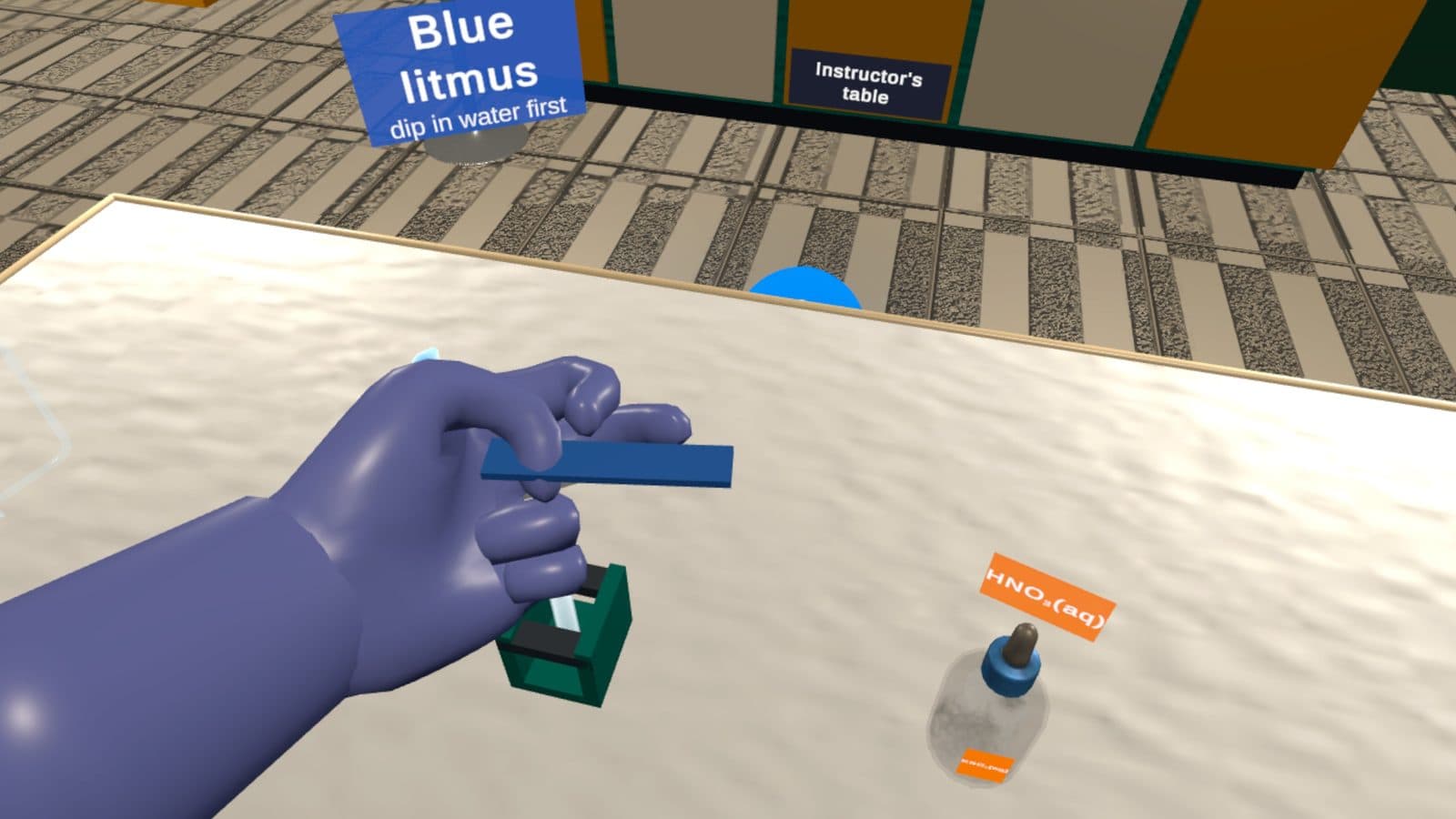
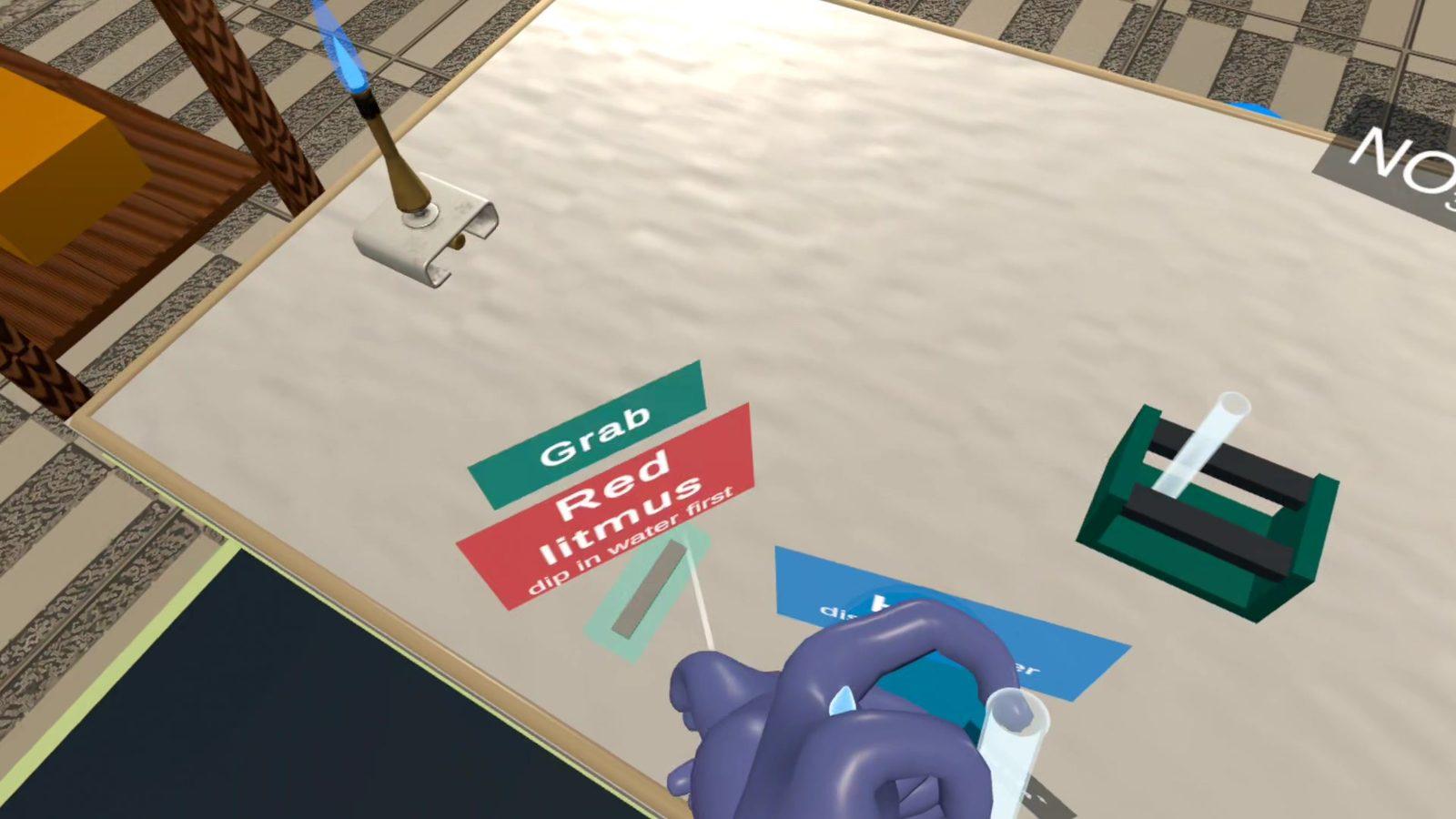
- Red and blue litmus at the bench, with the reminder to dip it in water first.
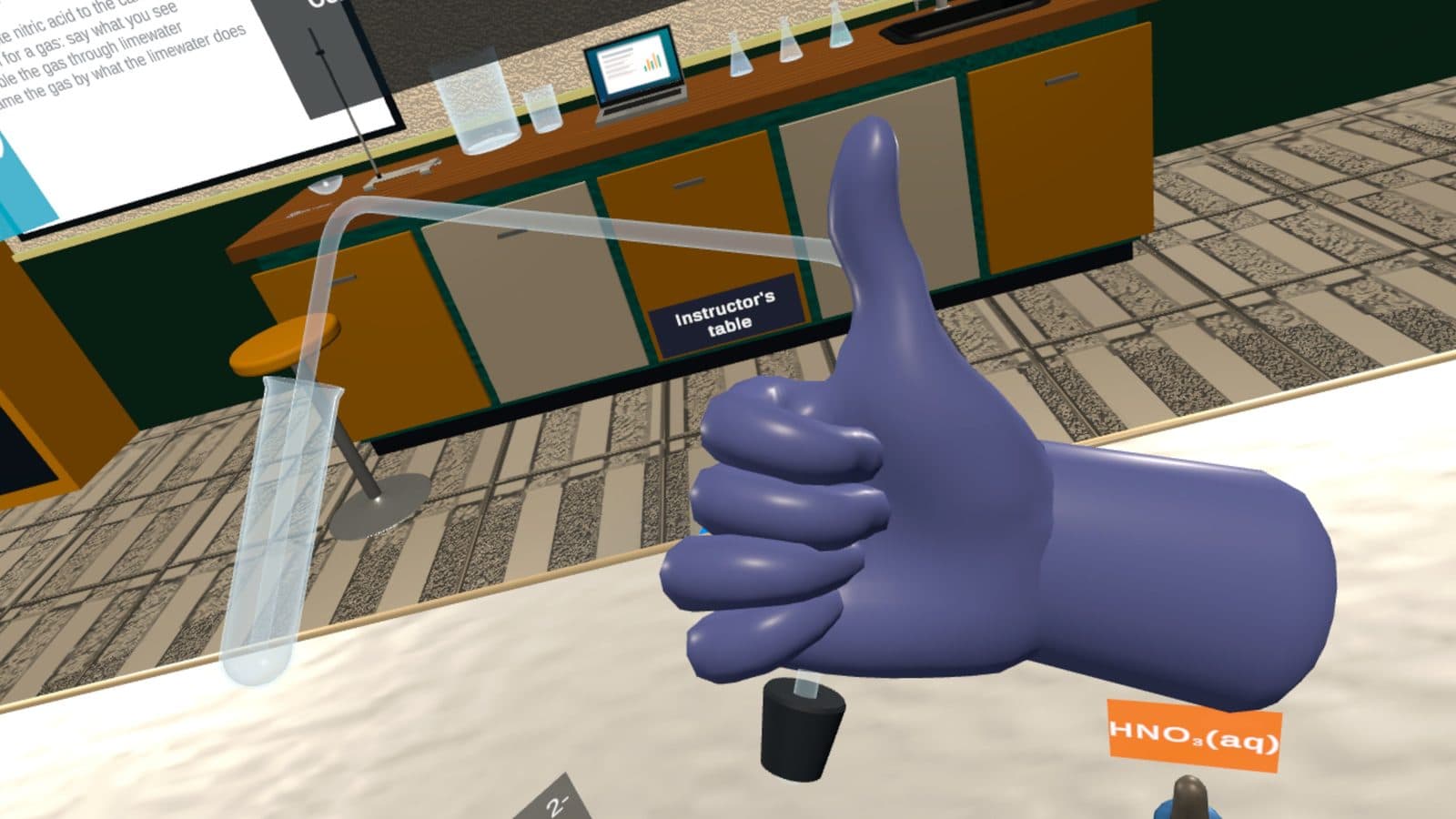
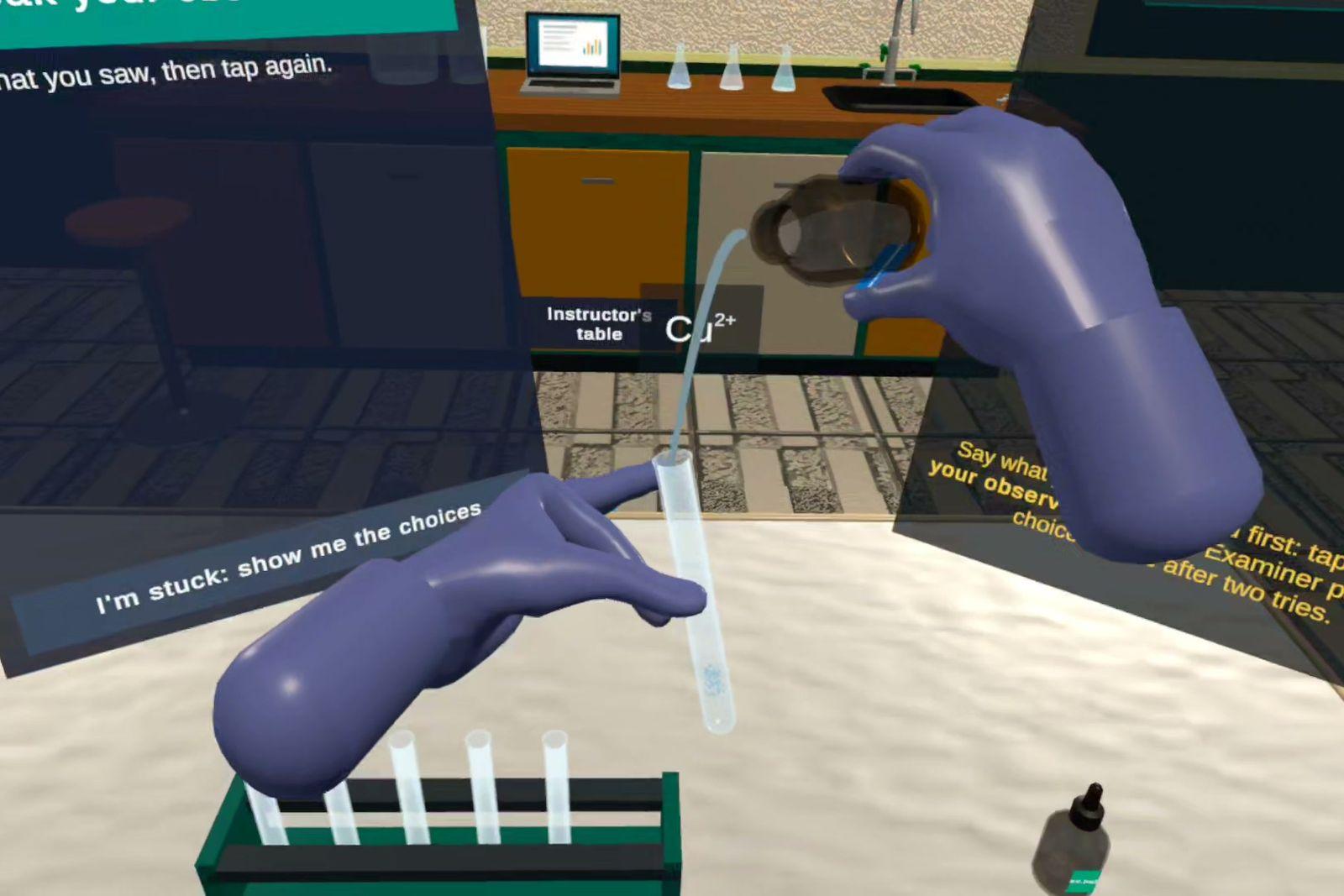
- Limewater and a delivery tube for carbon dioxide.
- A lesson on the board for naming the gas: hydrogen, oxygen, carbon dioxide and chlorine.
Want this in your school?
We are preparing our first school pilot. The first departments decide what gets built next.
Join the pilotFor students preparing for IGCSE practical papers. Not affiliated with or endorsed by Cambridge.